10 Common Mistakes to Avoid When Buying Property in Dubai

Author: Takween Aldar
Date: 04/05/2026
Read time: 12 min
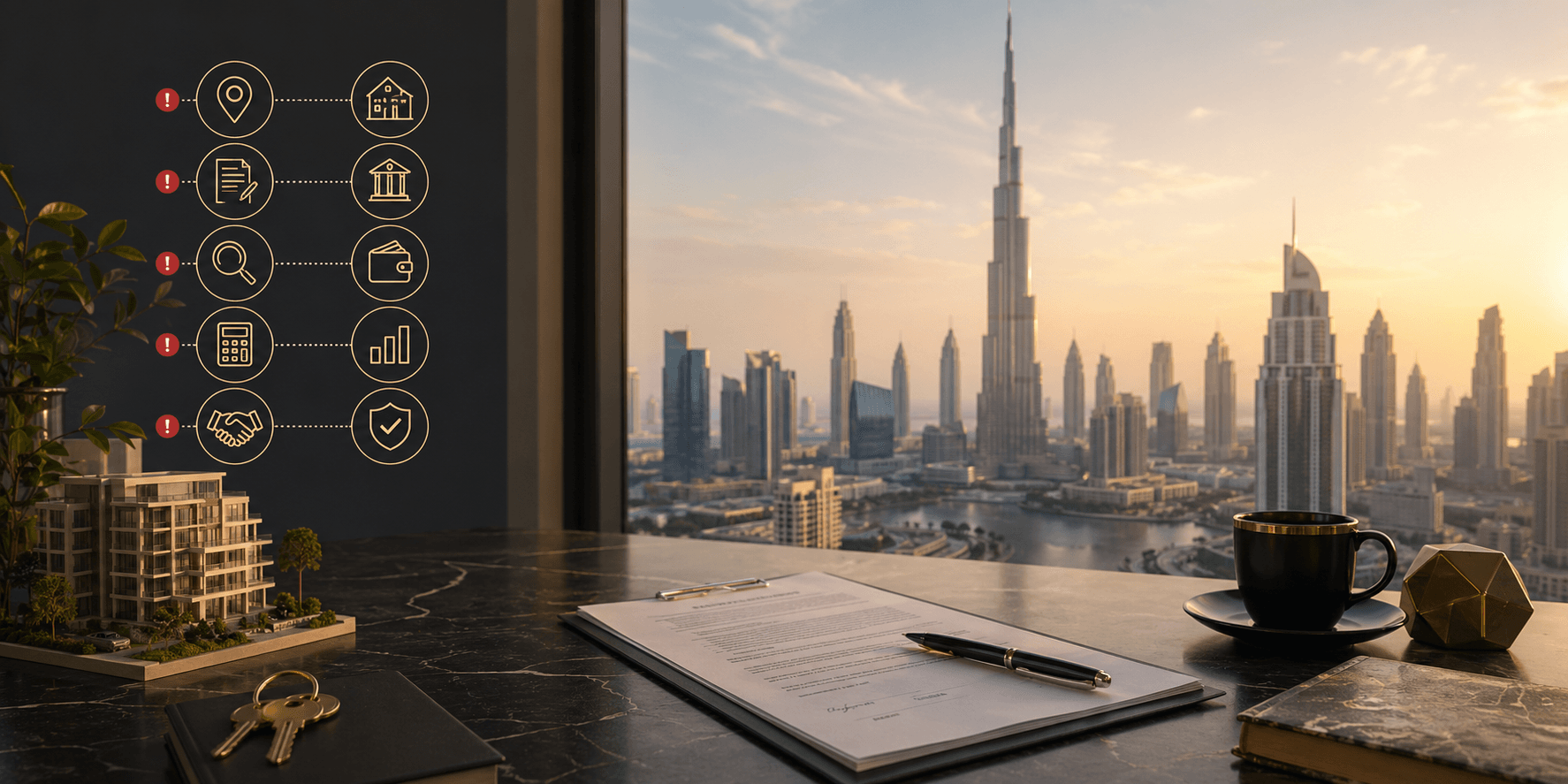
Dubai's real estate market is unlike any other on the planet. The skyline alone tells the story of gleaming towers, waterfront villas, and master-planned communities that once existed only as desert sand. It is tax-free, internationally accessible, and home to some of the highest rental yields globally. It is no surprise that buyers from India, the UK, Russia, China, and dozens of other countries are rushing to get a foothold here.
But here's the thing nobody tells you at the property expo: excitement is not a strategy.
Every year, thousands of buyers, first-timers and seasoned investors alike walk into the Dubai property market and make avoidable errors. Some lose money. Some end up in legal disputes. Some simply overpay because they did not know what to ask. The good news? Every single one of these mistakes can be avoided with the right knowledge and the right partner.
Whether you are buying an apartment or any properties to live in or building a portfolio for passive income, this guide walks you through the 10 most common mistakes buyers make in Dubai and exactly how to sidestep them.
Mistake #1: Jumping In Without Researching the Market
Dubai is not a monolithic market. It is a collection of micromarkets, each with its own price points, demand drivers, and investment potential. Downtown Dubai, Dubai Marina, Jumeirah Village Circle, and Dubai Hills Estate all perform very differently depending on the year, the economic climate, and the type of buyer.
One of the most damaging things a buyer can do is skip this research phase and purchase based on emotion, flashy brochures, or what a friend told them over dinner.
What you should do instead:
- Study price trends in your target area over the last 12-24 months
- Check whether it is currently a buyer's or seller's market in that community
- Look at the supply: are thousands of new units arriving in the next year?
- Understand occupancy rates and average rental yields in the area
- Use DLD (Dubai Land Department) transaction data and RERA reports for objective figures
A well-informed buyer does not just know the asking price; they know whether that price is fair, rising, or inflated.
Mistake #2: Ignoring the True Cost of Purchase
This is arguably the most financially painful mistake on this list. Many buyers calculate their budget based on the advertised property price alone, then discover at the point of transfer that they are tens of thousands of dirhams short.
The reality is that buying property in Dubai comes with a layer of mandatory fees and charges on top of the headline price.
Here is a breakdown of the costs you must factor in:
- DLD Transfer Fee: 4% of the purchase price one of the largest additional costs
- DLD Admin/Service Partner Fee: AED 2,000 (for properties under AED 500,000) or AED 4,000 (for properties AED 500,000 and above), plus VAT
- Title Deed and Map Fee: Approximately AED 250 for apartments and villas
- Agent Commission: Typically 2% of the purchase price, plus 5% VAT
- Mortgage Registration Fee (if applicable): 0.25% of the loan amount, plus approximately AED 290
- Property Valuation Fee: Usually AED 2,500-3,500
- Legal/Conveyancing Fees: AED 6,000-10,000 for professional representation
- NOC (No Objection Certificate) Fee: Charged by the developer, varies by project
As a rule of thumb, always add a buffer of 7-10% on top of the property price to cover all transaction-related fees. For a property priced at AED 1,000,000, you could realistically spend an additional AED 70,000-100,000 before you receive the keys.
Failing to account for these costs is not just inconvenient, it can derail your purchase entirely.
Mistake #3: Not Verifying the Developer's Track Record
Dubai has a robust regulatory environment. Developers must register with RERA, maintain escrow accounts for off-plan projects, and comply with DLD rules on project progress and fund usage. However, regulations do not guarantee that every developer will deliver a quality product on time.
Choosing a developer without checking their history is one of the most common mistakes in the off-plan segment.
Before committing to any off-plan project, ask:
- How many projects has this developer launched, and how many have been completed?
- Were previous projects delivered on time or significantly delayed?
- What is the quality of completed developments? Can you visit one in person?
- Is the project registered with RERA? Is there an active escrow account?
- What do existing residents and buyers say about post-handover service?
A developer who has launched 10 projects but handed over only two should raise serious red flags. Always verify the escrow account details with the DLD and check the developer's official standing on government platforms before signing.
Working with a reputable real estate consultancy like Takween AlDar gives buyers access to vetted projects from developers with proven delivery records so you are never making this call in the dark.
Mistake #4: Skipping Legal Due Diligence
Dubai's legal framework around property ownership is clear and well-structured but only if you understand it. Many buyers sign Sales and Purchase Agreements (SPAs) without reading them thoroughly, or without engaging a legal professional to review the terms.
This can lead to nasty surprises: unclear handover dates, vague penalty clauses, ambiguous "Force Majeure" provisions that give developers excessive flexibility to delay delivery, or payment schedules that conflict with verbal promises made by the sales team.
What proper legal due diligence looks like:
- Reviewing the SPA in full before signing, ideally with a lawyer
- Confirming the property's ownership status and any existing mortgages or liens through a DLD property status enquiry
- Ensuring the property title is clean and free of disputes
- Verifying that the agent is RERA-certified and the transaction is properly documented
- Understanding your rights and the developer's obligations under Dubai Law
For off-plan purchases specifically, it is important to know that Dubai Law No. 8 of 2007 mandates that all payments go into escrow accounts protecting buyers in case of project cancellation. Make sure this protection is in place before any funds leave your account.
Mistake #5: Misunderstanding Freehold vs. Leasehold Ownership
Not all areas of Dubai offer the same type of ownership. This distinction matters enormously, yet many buyers do not fully understand it before purchasing.
Freehold ownership: means you own the property and the land it sits on, outright and indefinitely. You can sell, rent, gift, or inherit it. This type of ownership is available in designated freehold zones like Dubai Marina, Palm Jumeirah, Downtown Dubai, Business Bay, and Dubai Hills Estate. Foreign nationals can purchase freehold property in these areas.
Leasehold ownership: means you hold the right to occupy the property for a defined period typically up to 99 years but you do not own the underlying land. At the end of the lease term, rights revert to the landowner unless renewed.
Why this matters:
- Freehold properties generally offer stronger resale value and higher investment security
- Leasehold properties may have renewal risks and restrictions on modifications
- Foreign buyers should always confirm whether the property they are purchasing is in a designated freehold zone to ensure full ownership rights
Confirming ownership type before you buy is not optional, it is essential.
Mistake #6: Overlooking Service Charges and Ongoing Costs
The purchase price is a one-time event. Service charges are forever.
Every jointly-owned property in Dubai apartments, townhouses in gated communities, and many villa projects comes with annual service charges. These fees cover building maintenance, security, landscaping, and common area upkeep. They are not optional, and they can be substantial.
Service charges typically range from AED 10 to AED 30 per square foot per year. For a 1,000 sq ft apartment, that translates to AED 10,000-30,000 annually a cost many buyers discover only after purchase.
High service charges directly reduce your net rental income and overall return on investment. Before buying, always:
- Request the current service charge schedule from the developer or RERA's Mollak platform
- Compare service charges across similar properties in the area
- Factor the annual service charge into your ROI calculation
- Ask whether service charges have historically increased year-on-year
A property with a headline rental yield of 7% can quickly look far less attractive once service charges, maintenance, and management fees are factored in.
Mistake #7: Making Emotional Decisions Without a Clear Investment Strategy
Dubai is a visually stunning city, and developers are exceptionally skilled at presentation. Show apartments are designed to impress. Launch events create urgency. Salespeople are trained to close. If you walk into this environment without a clear strategy, you are at risk of buying with your eyes rather than your head.
Emotional buying leads to:
- Overpaying for premium aesthetics that do not translate into rental yield
- Purchasing in locations that are beautiful but have weak tenant demand
- Choosing unit sizes that do not match the target rental market
- Ignoring long-term supply data in favour of a "feel" for the place
Before any purchase, define your strategy clearly:
- Are you buying to live, to rent, or to resell (flip)?
- What is your target rental yield and holding period?
- Who is the end tenant or buyer for this property? What do they want?
- How does this property fit into your overall financial goals?
A good real estate advisor will help you map out these questions before you fall in love with a view.
Mistake #8: Working Without a RERA-Certified Agent
In Dubai, all practising real estate agents must be licensed by RERA and hold a valid BRN (Broker Registration Number). This is not just a technicality working with an uncertified agent exposes you to risk, misinformation, and potentially unenforceable contracts.
Unlicensed agents and informal middlemen operate in the market, particularly targeting international buyers who are unfamiliar with local practices. They may not have access to accurate pricing data, may push properties that earn them the highest commission rather than the best fit for you, and may not be accountable to any regulatory body if things go wrong.
When working with any agent, always:
- Verify their RERA license number on the DLD's official broker verification platform
- Ensure all documentation including Form F (Memorandum of Understanding) is properly prepared
- Understand the commission structure upfront (typically 2% + VAT, paid by the buyer in secondary market transactions)
- Work with an agent from a reputable, established real estate firm
At Takween AlDar, every advisor is fully RERA-certified and operates under a transparent, client-first approach. Their team provides end-to-end guidance from market research and property selection all the way through to registration and handover so buyers always have a trusted professional in their corner.
Mistake #9: Skipping the Property Inspection
For ready properties, a physical inspection is non-negotiable. For off-plan properties, a thorough snagging inspection at handover is equally critical. Yet many buyers either trust the marketing images entirely or rush through the final walkthrough without proper scrutiny.
Common issues found during inspections include:
- Plumbing and waterproofing defects
- Poor finishing quality uneven tiles, chipped surfaces, gaps in fixtures
- Electrical issues or faulty fittings
- HVAC and ventilation problems
- Discrepancies between the SPA specifications and the actual delivered unit
In Dubai, developers are legally liable for structural defects for 10 years and for mechanical or electrical defects for 1 year following handover. But these protections only benefit you if you document the issues properly at the time of handover before you sign off.
Always hire a professional snagging company to conduct your inspection, and do not sign the handover acceptance form until all noted defects are acknowledged in writing by the developer.
Mistake #10: Not Getting Mortgage Pre-Approval Before Searching
One of the most strategic mistakes buyers make especially in a fast-moving market is searching for properties without knowing their financing position. By the time they find the right unit and return to the bank for approval, the property has been sold to another buyer.
Mortgage pre-approval gives you a clear picture of:
- How much the bank is willing to lend you
- Your maximum purchasing power, including fees
- Whether you qualify for a mortgage at all, based on your income, nationality, and employment status
- The realistic timeline for completing the transaction
In Dubai, the UAE Central Bank sets strict Loan-to-Value (LTV) ratios. Expats can typically borrow up to 75% of the property value for first homes, while UAE nationals may borrow up to 80%. For properties above AED 5 million, LTV limits tighten further.
Getting pre-approved also signals to sellers and developers that you are a serious buyer which can sometimes give you a negotiating advantage.
Why Choosing the Right Partner Makes All the Difference
Navigating the Dubai property market successfully is about more than just avoiding mistakes. It is about having the right team on your side professionals who understand the market deeply, operate with full transparency, and genuinely put your interests first.
Takween AlDar is a trusted real estate consultancy with deep roots in the Dubai market. Their team works with buyers across every segment from first-time apartment purchasers to high-net-worth investors building multi-property portfolios. From due diligence and developer verification to legal documentation and post-handover support, Takween AlDar provides the kind of comprehensive, personalised guidance that turns a potentially overwhelming process into a confident, successful purchase.
When you invest in Dubai, you deserve a partner who knows the market as well as you know your goals.
Answers to Your Questions
Frequently Asked Questions

Final Thoughts
Dubai's property market is one of the most exciting investment destinations in the world and for good reason. Tax-free ownership, strong rental yields, world-class infrastructure, and a growing population of high-income residents make it a compelling choice for buyers globally.
But great opportunities are only great when approached with clarity, preparation, and the right guidance. The ten mistakes outlined in this guide are not rare edge cases; they are traps that claim buyers every single day. The buyers who succeed in Dubai are not necessarily the richest or the most experienced. They are simply the most informed.
Do your research. Understand your full costs. Verify your developer. Respect the legal process. And when in doubt, seek professional advice from a team you can trust.
Insights
Dubai Real Estate Insights
Stay informed with market insights, community guides, buying advice, and investment updates across Dubai real estate. Explore articles designed to help buyers and investors understand pricing trends, area differences, off-plan opportunities, and the practical steps involved in securing property in Dubai.
04/05/2026
16 Best Areas for Off Plan Properties in Dubai for 2026
Read More
04/05/2026
How to Buy Property Remotely in Dubai: 2026 Step-by-Step Guide
Read More
04/05/2026
Freehold vs Leasehold Property Dubai: What's the Key Difference?
Read More
04/05/2026
Jumeirah Lake Towers Investment: A Guide to Profitable Property Options
Read More04/05/2026
16 Best Areas for Off Plan Properties in Dubai for 2026
Read More04/05/2026
How to Buy Property Remotely in Dubai: 2026 Step-by-Step Guide
Read More04/05/2026
Freehold vs Leasehold Property Dubai: What's the Key Difference?
Read More04/05/2026


 WhatsApp