Top Real Estate Developers in Dubai - Licensed & Trusted 2026

Author: Takween Aldar
Date: 04/05/2026
Read time: 17 min
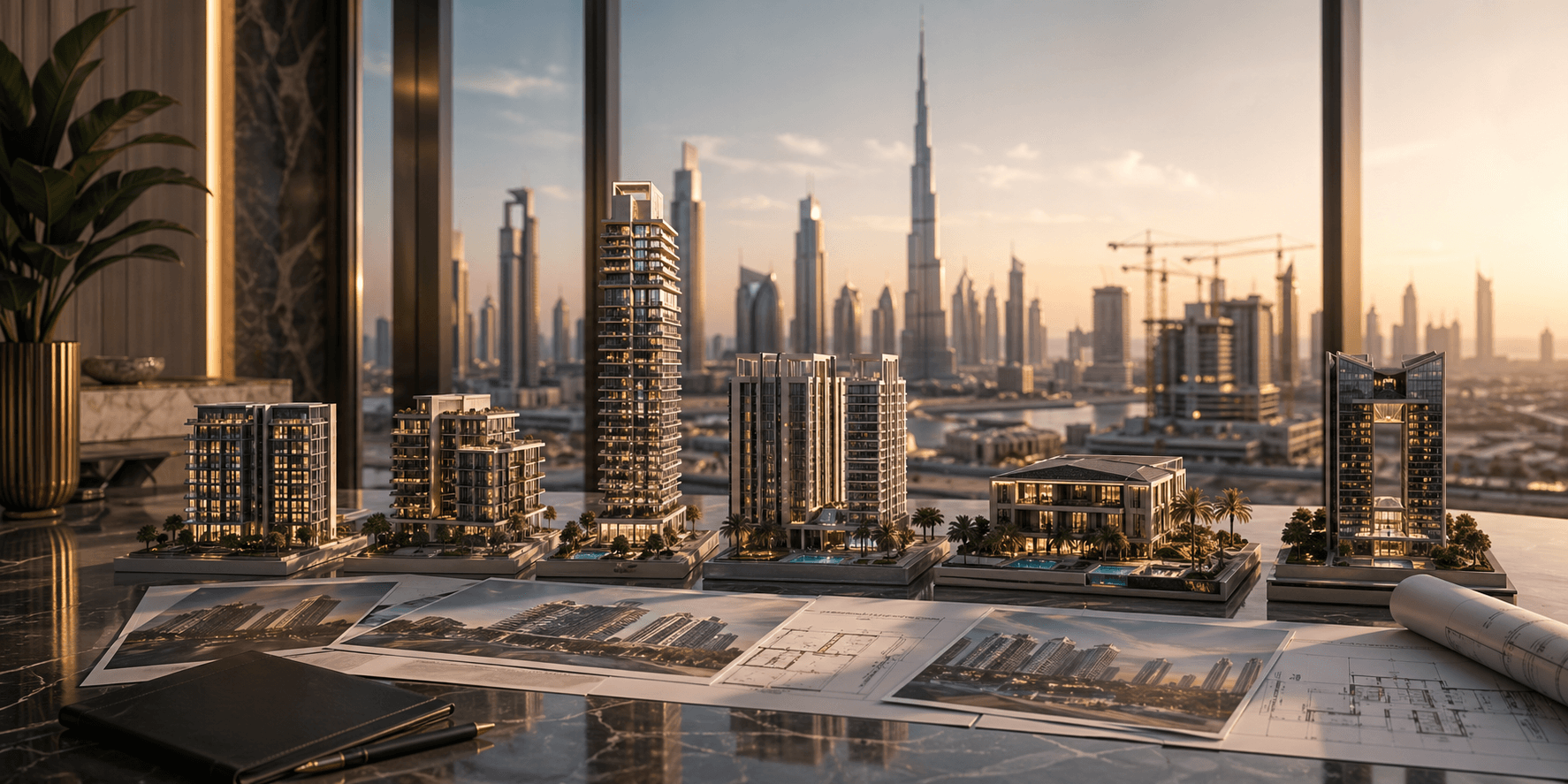
Top Real Estate Developers in Dubai
Dubai's property market crossed AED 72.5 billion in sales in January 2026 alone. Behind every one of those transactions is a developer, a company that designed the project, secured the land, obtained the permits, managed the construction, and will ultimately hand over the keys to the buyer.
In a market this large, this active, and this globally watched, the question isn't just where to buy in Dubai. It's who to buy from.
And while the city's strong regulatory framework mandatory escrow accounts, RERA oversight, Oqood registration protects buyers from outright fraud, it does not protect them from delays, quality disappointments, high service charges, or poor community management. Those outcomes are determined entirely by the developer you choose.
This guide profiles the top real estate developers shaping Dubai in 2026: their flagship projects, what they do best, who they're right for, and the data behind their reputations. Whether you're a first-time buyer, a seasoned investor, or an international buyer navigating the market remotely, this is the starting point for making an informed developer decision.
Why Your Developer Choice Matters More Than Almost Anything Else
Before diving into the profiles, it's worth understanding exactly why the developer decision is so consequential in Dubai specifically.
Unlike mature Western real estate markets where you typically buy a completed home from a private seller, over 70% of Dubai's 2026 residential transactions are off-plan meaning buyers commit capital before a building exists in the form they're purchasing. In this environment:
- The developer's financial stability determines whether the project gets built at all
- Their construction track record determines whether your unit is delivered on time and to specification
- Their community planning determines the quality of life and the service charge burden you'll carry for years
- Their brand strength determines how quickly your unit sells or rents in the secondary market
- Their after-sales support determines your experience in the years after handover
A strong developer is not just a construction company. They are a long-term partner in your investment. Choose wisely, and that partnership pays dividends for a decade. Choose poorly, and the consequences delays, quality disputes, high fees, illiquid resale can linger for just as long.
The Top Real Estate Developers in Dubai: 2026 Rankings
The following profiles are based on Dubai Land Department (DLD) transaction data, verified delivery records, Q1 2026 sales performance, and market reputation assessments from the current cycle.
1. Emaar Properties The Market Benchmark
Established: 1997 2025 Sales Value: AED 80.4 billion Q1 2026 Sales: AED 30.17 billion (ranked #1 by total value) Units Delivered: 118,400+ worldwide since 2002 Segment: Mid-market to ultra-luxury
If there is one name synonymous with Dubai real estate, it is Emaar. Founded in 1997, Emaar is Dubai's largest publicly listed real estate developer and the benchmark against which every other developer in the market is measured.
Emaar built the Burj Khalifa. It created Downtown Dubai and Dubai Mall. It developed Dubai Hills Estate, Arabian Ranches, Dubai Creek Harbour, and The Valley, each a self-sustaining master community with integrated schools, retail, hospitality, parks, and transport links. In 2025, Emaar recorded AED 80.4 billion in sales, the highest of any developer in the market and entered 2026 with over 51,000 units in its active construction pipeline.
Flagship Projects:
- Downtown Dubai (Burj Khalifa, Dubai Mall, Opera District)
- Dubai Hills Estate (golf course, schools, Dubai Hills Mall)
- Arabian Ranches 1, 2 & 3 (established villa communities)
- Dubai Creek Harbour (next-generation waterfront living)
- The Oasis (Dubai's most anticipated upcoming luxury villa project)
What Emaar does best:
- Long-term master community planning developments that only improve over time
- Delivery consistency one of the strongest on-time records of any major developer
- Resale liquidity Emaar units trade in the secondary market more actively than any other developer brand
- Premium to ultra-premium product without sacrificing community infrastructure
Best for: Long-term investors seeking capital preservation and strong liquidity; end-user families wanting established, well-managed communities.
The trade-off: Payment plans are less flexible than smaller developers (typically 80% due before or at handover). Entry prices carry the Emaar premium roughly 10-20% above comparable developers in the same location.
2. DAMAC Properties The Luxury Lifestyle Developer
Established: 2002 2025 Sales Value: AED 35.9 billion Units Delivered: 50,000+ Pipeline: 54,000+ under construction Segment: Upper mid-market to ultra-luxury
DAMAC is the developer that brought lifestyle-driven luxury to Dubai's residential market. Founded in 2002 by Hussain Sajwani, DAMAC was an early mover in off-plan luxury sales and has since delivered over 50,000 homes across Dubai and internationally.
What sets DAMAC apart is its consistently bold positioning. From branded collaborations with Versace, Cavalli, and Paramount Hotels to master communities built around golf courses and artificial lagoons, DAMAC has made aspirational lifestyle the core of its product proposition. This approach attracts investors targeting short-term rental income, luxury end-users, and international buyers drawn to globally recognised brands.
Flagship Projects:
- DAMAC Hills 1 & 2 large master communities with golf and leisure focus
- DAMAC Lagoons & Riverside water-centric resort-style living
- DAMAC Islands fast-selling waterfront villa product (Islands 2 sold AED 11 billion in five hours in November 2025)
- Branded towers Cavalli, Paramount, and others
What DAMAC does best:
- Luxury lifestyle positioning and branded residence expertise
- Aggressive, flexible payment plans very accessible for international investors
- Large master community scale schools, golf, retail, leisure within the community
- Short-term rental performance DAMAC projects are popular in the holiday home market
Best for: Investors targeting the luxury short-term rental segment; lifestyle-oriented buyers; those attracted to branded residences and international brand partnerships.
The trade-off: Delivery timelines can be variable across different projects. Resale performance is more dependent on lifestyle appeal than location fundamentals in some communities.
3. Nakheel The Master of Dubai's Waterfront
Established: 2000 Ownership: Dubai Holding (Government of Dubai) Key Communities: Palm Jumeirah, Palm Jebel Ali, Dubai Islands, Deira Islands Segment: Premium to ultra-luxury waterfront
Nakheel is responsible for one of the most audacious achievements in modern real estate: creating Palm Jumeirah a man-made island that became arguably the world's most recognisable residential address. As a subsidiary of Dubai Holding, owned by the Government of Dubai, Nakheel offers unmatched financial stability and delivery certainty.
In 2026, Nakheel is focused on two mega-developments: Palm Jebel Ali (a second man-made island larger than Palm Jumeirah, with villa prices starting from AED 18.5 million) and Dubai Islands (a five-island archipelago off the Deira coastline targeting the lifestyle and tourism market). Both projects represent generational-scale investments in Dubai's long-term waterfront vision.
Flagship Projects:
- Palm Jumeirah the original iconic address
- Palm Jebel Ali the next waterfront mega-project
- Dubai Islands five-island coastal development
- Al Furjan & Discovery Gardens established affordable residential communities
- Bluewaters Island home to the Ain Dubai observation wheel
What Nakheel does best:
- Waterfront and island development at a scale no other developer can replicate
- Government backing the strongest financial guarantee of any developer category in Dubai
- Destination-style communities that integrate hotels, retail, and leisure
- Rental yields of 8-12% for well-positioned units on Palm Jumeirah
Best for: Investors prioritising capital security through government-backed development; buyers seeking waterfront exclusivity and limited-supply addresses; those targeting the premium rental market.
The trade-off: Entry prices at Nakheel's flagship waterfront developments are among the highest in the market. Affordable products (Al Furjan, Discovery Gardens) are available but in less premium locations.
4. Sobha Realty The Quality Standard Bearer
Established: 1976 (Dubai operations from early 2000s) 2025 Sales Value: AED 22.4-30 billion Delivery Adherence: 85-90% on-time rate (best among major private developers) Segment: Premium to ultra-premium
If Emaar is Dubai's most trusted developer and DAMAC is the most aspirational, Sobha Realty is the most quality-obsessed. Established in 1976 and operating in Dubai for over two decades, Sobha has built its reputation on one simple principle: do not compromise on construction quality.
What makes Sobha structurally different is its vertically integrated model. Unlike most developers who outsource construction to third-party contractors, Sobha controls every stage of the build architecture, MEP, joinery, stone, landscaping in-house. This internal control translates directly into finishing consistency, fewer post-handover defects, and tighter delivery timelines.
Flagship Projects:
- Sobha Hartland & Hartland II premium low-density villa and apartment living near Ras Al Khor Wildlife Sanctuary
- Sobha Creek Vistas panoramic Downtown and Creek skyline views
- Sobha One a premium waterfront tower with a five-in-one concept
- Sobha Siniya Island UAQ waterfront development generating AED 8 billion in 2025 sales
What Sobha does best:
- Construction quality that exceeds Dubai's market norm
- Delivery consistency 85-90% on-time completion rate is a standout in the market
- Long-term resale value driven by build quality reputation
- Strong end-user demand from families and discerning lifestyle buyers
Best for: End-users who plan to live in the property; long-term investors who value quality as the primary driver of appreciation; buyers in European and Asian markets where construction quality is the core purchase criterion.
The trade-off: Higher pricing per sq ft reflects the quality premium. Payment plans are less flexible than volume developers. Lower gross rental yields (5-7%) compared to mid-market options, offset by stronger capital appreciation.
5. Meraas The Urban Lifestyle Curator
Established: 2007 2025 Sales Value: AED 20.8 billion Ownership: Dubai Holding (Government of Dubai) Segment: Upper mid-market to ultra-luxury
Meraas occupies a unique position in Dubai's development landscape: it is less a residential developer than a place-maker. Under the Dubai Holding umbrella alongside Nakheel, Meraas creates destinations first blending retail, leisure, hospitality, and residential into integrated urban environments that attract footfall, tourism revenue, and premium residential demand simultaneously.
City Walk, La Mer, Bluewaters Island, and Boxpark are not just addresses, they are Dubai experiences that generate constant organic demand for the residential product within them.
Flagship Projects:
- City Walk urban living integrated with premium retail and dining
- La Mer beachfront lifestyle development with direct sea access
- Bluewaters Island home to the Ain Dubai and waterfront residences
- Nikki Beach Residences branded beachfront living
- Bvlgari Resort & Residences ultra-luxury collaboration at Jumeirah Bay Island
What Meraas does best:
- Lifestyle-integrated communities with genuine destination appeal
- Government-backed stability combined with boutique design quality
- Waterfront and urban locations with strong organic rental demand from tourists and lifestyle tenants
- Q1 2026 average sale price: AED 7.37 million per unit the highest of any developer in Dubai
Best for: Lifestyle-driven buyers who want to live in Dubai's most vibrant destinations; investors targeting premium short-term rental income from tourism-adjacent properties.
6. Ellington Properties The Design-First Boutique Developer
Established: 2014 Delivered Projects: Multiple with a reported 96% occupancy rate Segment: Premium, design-led boutique
In a market dominated by volume and scale, Ellington Properties has carved out a distinctive niche by doing something relatively rare in Dubai: treating architecture and interior design as the core product, not an afterthought.
Founded in 2014, Ellington is not trying to be Emaar. It delivers fewer units per year but with significantly higher specification, art-inspired interiors, and architectural concepts that distinguish their buildings from the rest of the street. Their projects consistently attract design-conscious buyers from Europe, Asia, and beyond who see the aesthetic quality as both a lifestyle benefit and a resale differentiator.
Flagship Projects:
- Ellington House, Business Bay (canal waterfront)
- DT1, Downtown Dubai
- The Crestmark, Business Bay
- Projects across JLT, MBR City, and Palm Jumeirah
What Ellington does best:
- Interior design quality measurably above market standard
- Art-curated communal spaces and lifestyle amenities
- 96% occupancy rates on delivered projects one of the highest in the market
- Gross rental yields of 6.2-7.4% in Business Bay
Best for: Design-conscious end-users; investors targeting high-income professional tenants; buyers in Western markets where interior specification drives purchasing decisions.
The trade-off: Prices run 15-20% above the community average for comparable square footage. Smaller transaction volumes mean slightly shallower secondary market liquidity than larger developer brands.
7. Binghatti Developers The Architecture-Driven High-Volume Disruptor
Established: 2008 2025 Transaction Volume: 17,061 deals (highest of any private developer) Active Projects: 40+ with 27 under development and 11 in advanced planning Segment: Affordable to ultra-luxury (widest range of any developer)
Few developers in Dubai's recent history have grown as fast or as boldly as Binghatti. Founded in 2008, the company has built its identity on two pillars: striking architectural design (its geometric facades are immediately recognisable across the skyline) and headline-grabbing branded collaborations Bugatti, Mercedes-Benz, and Jacob & Co. residences that have attracted global media attention.
By transaction count, Binghatti led Dubai's entire market in 2025 with 17,061 deals, more than any other developer. The company also has a strong track record of delivering projects ahead of schedule, which is a significant differentiator in a market where delays are common.
Flagship Projects:
- Bugatti Residences by Binghatti, Business Bay (from AED 19.1M)
- Mercedes-Benz Places by Binghatti, Downtown Dubai (from AED 8.8M)
- Burj Binghatti Jacob & Co Residences (one of the world's tallest branded towers)
- Binghatti Hills, Dubai Science Park (from AED 778K)
- Binghatti Apex, JVC (from AED 650K)
What Binghatti does best:
- Delivering high transaction volumes rapidly with consistent quality
- Operating across the full price spectrum from AED 650K entry-level to AED 19M+ ultra-luxury
- Branded residence collaborations that attract global luxury press coverage
- Ahead-of-schedule delivery a genuine competitive differentiator
Best for: Value-oriented investors seeking design differentiation; buyers drawn to branded residence concepts; first-time investors in the AED 650K-AED 2M range.
8. Danube Properties The Affordable Luxury Pioneer
Established: 2014 Projects Launched: 34 (18 delivered, 16 under construction) Pipeline: 21,000+ residential units Segment: Affordable to mid-market
Danube Properties, the development arm of Danube Group, changed the Dubai market with a simple but powerful innovation: the 1% monthly payment plan. Instead of requiring large upfront payments, Danube allows buyers to pay as little as 10% at booking and then 1% of the purchase price per month making entry into Dubai's freehold market genuinely accessible for first-time buyers and mid-income investors for the first time.
The developer has launched over 34 projects, delivered 18 with a strong track record of on-time (and in several cases early) delivery, and built an active community of repeat buyers who have bought multiple Danube units.
Flagship Projects:
- Viewz by Danube x Aston Martin, JLT (from AED 950K)
- Fashionz by Danube x FashionTV, JVT (from AED 907K)
- Bayz 101, Business Bay (from AED 1.18M)
- Oceanz 1, 2, 3, Dubai Maritime City (from AED 1.1M)
- Breez by Danube, Dubai Maritime City 60-storey waterfront tower
What Danube does best:
- 1% monthly payment plans the most accessible in the market
- Furnished apartments reducing the setup cost and time-to-rental for investors
- Strong rental yields of 8-10% due to competitive pricing
- Consistent delivery track record with several projects handed over ahead of schedule
Best for: First-time buyers transitioning from renting to owning; investors seeking high rental yields at accessible entry prices; buyers who need maximum payment flexibility.
9. Azizi Developments The Volume Mid-Market Operator
Established: Active in Dubai since the mid-2010s Portfolio: Wide geographic footprint across established and emerging communities Segment: Affordable to mid-market
Azizi Developments is one of Dubai's most active high-volume developers by transaction count, with a broad footprint across the city's established and emerging residential communities. The developer's strategy is straightforward: deliver large volumes of competitively priced residential units in areas with strong rental demand, with flexible payment plans accessible to overseas investors.
Notable Projects:
- Azizi Venice, Dubai South French Mediterranean-inspired waterfront community near Al Maktoum Airport
- Azizi Riviera, Mohammed Bin Rashid City multi-phase waterfront community with retail and dining
- Burj Azizi announced as a potential contender for one of the world's tallest towers
What Azizi does best:
- Competitive pricing with strong rental yield potential (7-9%)
- Wide geographic coverage offering access across the market
- Flexible payment structures attractive to overseas investors
- Consistent project launches supporting market supply
Best for: Yield-focused investors; first-time buyers seeking affordable entry; overseas investors prioritising price point and payment flexibility over premium branding.
| Developer | Segment | 2025 Sales Value | Best For | Avg. Rental Yield |
|---|---|---|---|---|
| Emaar | Mid-market to ultra-luxury | AED 80.4B | Long-term capital growth | 5–7% |
| DAMAC | Luxury to ultra-luxury | AED 35.9B | Short-term rental, branded lifestyle | 5–7% |
| Nakheel | Premium to ultra-luxury | AED 7.27B (Q1 2026) | Waterfront, government-backed security | 8–12% |
| Sobha Realty | Premium to ultra-premium | AED 22.4B | End-use quality, delivery reliability | 5–7% |
| Meraas | Upper mid-market to ultra-luxury | AED 20.8B | Urban lifestyle destinations | 5–7% |
| Ellington | Premium boutique | N/A (private) | Design-conscious buyers | 6.2–7.4% |
| Binghatti | Affordable to ultra-luxury | AED 16.2B | Volume, early delivery, branded design | 6–8% |
| Danube | Affordable to mid-market | N/A (private) | 1% plans, first-time buyers | 8–10% |
| Azizi | Affordable to mid-market | N/A (private) | Yield-focused, accessible pricing | 7–9% |
How to Evaluate Any Developer Before You Buy
Regardless of which developer you're considering, these five due diligence checks should happen before you sign anything.
✅ Check 1: RERA Registration
Every legitimate off-plan project must be registered with RERA before sales begin. Verify the project on the Dubai REST App or the DLD website. If it is not in the official system, do not pay a dirham.
✅ Check 2: Verify the Escrow Account
Under Dubai Law No. 8 of 2007, all buyer payments must go to a project-specific escrow account, not the developer's general company account. Ask for the escrow account number and trustee bank name, then verify it via the Dubai REST App.
✅ Check 3: Review the Delivery Track Record
Visit completed projects by the same developer. Speak to residents. Compare what was marketed at launch against what was actually delivered. A pattern of consistent delivery is the strongest predictor of your own experience.
✅ Check 4: Read the SPA Carefully
The Sales and Purchase Agreement governs your rights across the entire construction period and beyond. Check the handover date, penalty clauses for delays, specification commitments, and refund mechanisms. A developer unwilling to include developer-default penalties is a red flag.
✅ Check 5: Assess the Service Charge Projection
Service charges in Dubai range from AED 5 to AED 45 per sq ft annually, depending on the development. A unit priced attractively can become a poor yield investment if service charges are unsustainably high. Ask for the indicative service charge per sq ft before committing.
How Takween AlDar Helps You Navigate the Developer Landscape
Understanding the developer market is valuable. But translating that understanding into the right purchase decision for your specific budget, timeline, risk appetite, and investment goal requires something data alone cannot provide: experience-backed, on-the-ground advisory.
Takween AlDar is a RERA-certified Dubai real estate agency with deep expertise across every developer tier in the market. Whether you're deciding between an Emaar ready unit and a Danube off-plan launch, evaluating whether a Sobha villa or a Binghatti apartment better suits your yield and capital growth objectives, or simply trying to understand which developer is offering genuine value in the current market cycle Takween AlDar's advisors bring the contextual insight that turns market information into confident decisions.
Here's what sets Takween AlDar's developer advisory apart:
- Verified developer track record reviews every recommendation is backed by a completed project assessment, not marketing materials
- Pre-launch access Takween AlDar clients regularly access new off-plan project launches from Dubai's top developers before they open to the general public, securing early-buyer pricing advantages weeks or months ahead of the market
- Investment strategy alignment helping you match developer strengths to your specific goals: Emaar for long-term capital appreciation and resale liquidity, Danube for cash-flow-friendly yields, Sobha for quality-driven end-use, and so on
- Developer vs. developer comparison when two developers are competing for the same investment dollar in the same community, Takween AlDar provides the analysis that goes beyond the floor plan
- Golden Visa structuring identifying qualifying properties from the right developers to meet the AED 2 million DLD threshold and secure 10-year UAE residency
- Full transaction management from booking fee to title deed, Takween AlDar manages the process across every developer platform
The developer you choose shapes your entire property investment experience. Takween AlDar makes sure that choice is made with complete information and genuine expertise behind it.
Answers to Your Questions
Frequently Asked Questions

Final Thoughts
Dubai's property market offers extraordinary opportunities across every price point, from a AED 650,000 Binghatti studio to a AED 50 million Nakheel villa on Palm Jumeirah. But the opportunity only materialises if the developer behind your purchase delivers on time, to specification, with a community worth living in and an asset worth selling when the time comes.
The developers profiled in this guide have all earned their market position through track records of delivery, quality, and community management. The distinctions between them are nuanced and that nuance is where the right advisory matters most.
Know your goals. Know your developer. And work with advisors who know the market deeply enough to tell the difference between a good project and a great one.
Insights
Dubai Real Estate Insights
Stay informed with market insights, community guides, buying advice, and investment updates across Dubai real estate. Explore articles designed to help buyers and investors understand pricing trends, area differences, off-plan opportunities, and the practical steps involved in securing property in Dubai.
04/05/2026
Top Real Estate Developers in Dubai
Read More
04/05/2026
Oqood Dubai: Registration Process, Benefits and Costs Explained
Read More
04/05/2026
UAE Mortgage Down Payment Guide: What You Need to Know in 2026
Read More
04/05/2026


 WhatsApp